
No increase in fares for Suburban Services, Season Tickets, and up to 215 km in Second Class Ordinary; rates increased for non-AC and AC classes in Mail and Express trains. Here's the full details of changes.
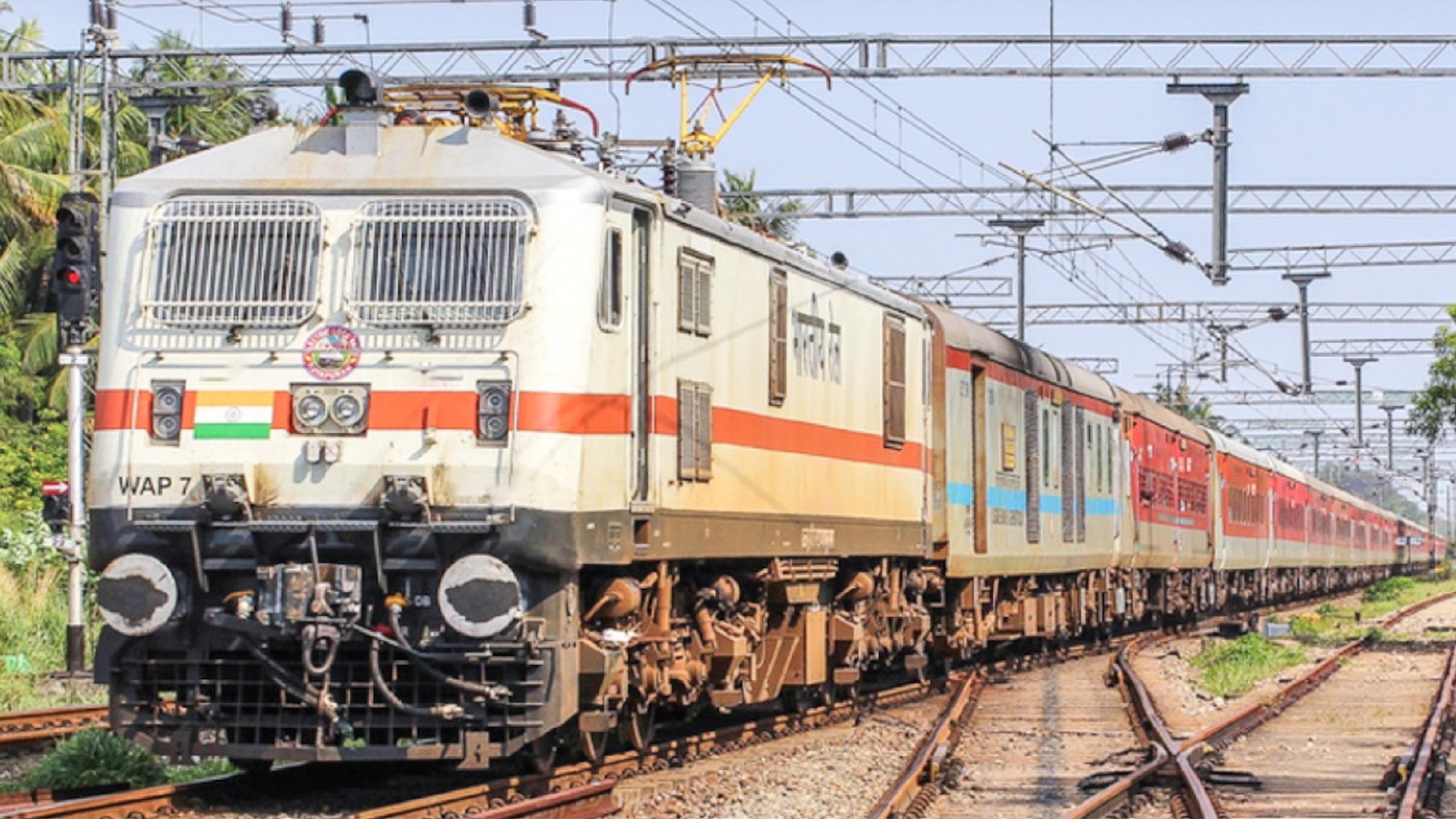
Indian Railways has rationalised passenger train fares once again this year, with effect from 26 December 2025, increasing the rates for non-AC and AC classes in Mail and Express trains.
Indian Railways had previously rationalised passenger train fares, earlier this year on 1st July 2025, with a small increase in fares per kilometre travelled. And now, with effect from 26th December 2025, it is once again similarly increasing the rates for non-AC and AC classes in Mail and Express trains by a nominal amount, to bear the increasing cost of operations.
These revised fares are applicable only on tickets booked on or after 26 December 2025, and you'll not be charged the new increased fares if you've booked advance tickets before 26 December 2025, for a journey after that date.
As before, there is no change in fares for suburban services and Season Tickets, including both suburban and non-suburban routes, under this revised fare structure.
For Ordinary Non-AC (Non-Suburban) services, the fares have been rationalised in a graded manner across Second Class Ordinary, Sleeper Class Ordinary, and First Class Ordinary.
Details of rationalised fare structure
Below are details of the change in fares in all types of trains of Indian Railways, with effect from 26 December 2025.
- No change in fares for Suburban services and Season Tickets, including both suburban and non-suburban routes.
- In Second Class Ordinary: For travel up to 215 kilometres, there's no increase in fares.
- In Second Class Ordinary: For travel above 215 kilometres, 1 Paise per kilometre increase in fares, such that :
- For distances from 216 km to 750 km, the fare increases by ₹5.
- For longer journeys, the increase is applied in steps — ₹10 for distances between 751 km and 1250 km, ₹15 for distances between 1251 km and 1750 km, and ₹20 for distances between 1751 km and 2250 km.
- Sleeper Class Ordinary and First Class Ordinary: fair increased by 1 Paisa per kilometre, for non-suburban journeys.
- For AC and Non-AC classes in Mail or Express Trains: 2 Paise per kilometre increase in fares.
- This includes Sleeper Class, First Class, AC Chair Car, AC 3-Tier, AC 2-Tier, and AC First Class.
- For example, for a 500 km journey in non-AC Mail/Express coaches, you'll need to pay only about ₹ 10 extra.
Further details to note
Existing basic fares of major train services, including Tejas Rajdhani, Rajdhani, Shatabdi, Duronto, Vande Bharat, Humsafar, Amrit Bharat, Tejas, Mahamana, Gatimaan, Antyodaya, Garib Rath, Jan Shatabdi, Yuva Express, Namo Bharat Rapid Rail, and Ordinary non-suburban services (excluding AC MEMU/DEMU, where applicable), are revised in line with the approved class-wise basic fare increases.
No changes have been made in reservation fees, superfast surcharges, or other ancillary charges, which will continue to be levied as per existing rules. GST applicability remains unchanged, and fares will continue to be rounded off according to prevailing norms.
These revised fares are applicable only on tickets booked on or after 26 December 2025. Tickets that are booked before this date will not attract any additional charges, even if the journey is undertaken after the effective date.
The Ministry of Railways states that Indian Railways remains committed to providing safe, reliable and affordable travel to millions of passengers every day, and that the revised fare structure reflects a balanced approach that safeguards passenger convenience while maintaining operational sustainability.
As Indian Railways has expanded its network and operations significantly over the last decade, it has also increased its manpower, along with several improvements in safety aspects, better facilities and modernisation in coaches, train services, and railway stations.
To meet the higher costs due to increase in manpower as well as these operational costs, and to keep subsidising the passenger fares as before, they're focusing more on freight or cargo and increasing the passenger fares by only a small amount.
India is now the second-largest cargo carrying railway in the world. Indian Railways uses the profits from freight or cargo to offset the losses in subsidising the passenger fares.
As per a report by the Ministry of Railways earlier this year on April 2025, Indian Railways provides train tickets with subsidised prices, with an average concession of 46% to every person travelling on its trains. That is, if the cost of providing service is Rs. 100, then the price of ticket is Rs. 54 only.
This subsidy continues for all passengers. Also, concessions beyond this subsidy amount are continuing for many categories of train travellers such as: 4 categories of Persons with disabilities (Divyangjans), 11 categories of patients and 8 categories of students.
Despite the heavy subsidies on passenger fares, it still gained a Net Profit of ₹3,260 Crore during 2023-24. While it provides large concessions on passenger fares, it earns through its freight or goods transportation services. It aims to earn about 600 crore rupees this year, as a result of this recent rationalisation in fare structure.
This way, Indian Railways successfully provides affordable services to the masses as well as continues to increasingly provide new advanced modern train services such as Vande Bharat, Amrit Bharat, Namo Bharat, as well as better LHB coaches in other trains.
- Indian Railways Rationalises Fare Structure; No Fare Increase for Suburban Services, Season Tickets and Second Class Ordinary Journeys up to 215 km - Ministry of Railways, on PIB - Press Information Bureau. Posted On: 25 DEC 2025 5:30PM by PIB Delhi.
- Commercial Circular No. 24 of 2025 - Govt. of India, Ministry of Railways, on Indian Railways
- Indian Railways Achieves ₹2.56 Lakh Crore Revenue in 2023-24 with Net Profit of ₹3,260 Crore Amid Major Investments in Staff, Pension, and Energy - Ministry of Railways, on PIB - Press Information Bureau. Posted On: 02 APR 2025 7:39PM by PIB Delhi